 During conversations with clients, contemporaries, and coworkers, there is often a lean towards getting attention, found, and remembered. What I often find missing is the “what happens next?”
They are not wrong. Most websites are like trees in a forest. “If a tree falls in a forest and no one is around to hear it, does it make a sound?” If nobody sees your website, does it really matter?
But all too often, people spend way more time, money, and attention trying to get people to a URL than they do worrying about what is actually on the website itself.
The real problem is not getting more people to the website, but getting the RIGHT people to your website. Even more important is whether the right people find your website content to be interesting, engaging, and actionable to them.
So I want to discuss what you should invest in on your website, and how to entice people to take actions that actually lead to your desired results… more sales!
Getting Attention
 In the old days (pre-AI), websites were built with SEO and search engines in mind. The more relevant information you have on your website that matches keywords, the better your chances are of getting a click back to your website. That meant more content gave you better chances of getting attention.
With the advent of social media, AI, and the attention economy, too much information means people have to work too hard to get to the point of your purpose for driving them to your site. People just don't want a bunch of information when it comes to the core pages of your website, meaning that today's websites benefit from a less-is-more approach. Too much information takes up too much time and causes people to lose interest quickly in your base website content.
The exception to that is when you have educational content that really needs more details or explanation. This is usually found in blog content. That means that keeping your blogs short may also be hurting the results.
Keeping your pages short and concise lets you link to blogs that go into more detail if people really want to dig deeper.
With today's short-attention-span theater and attention economy, people consume, but they need to be told what to do next. The most important thing that both pages and blogs need is a clear call to action. That could mean contacting us, calling, or downloading something.
The Three Key Components
 It used to be that you had 2 minutes and 3 clicks to succeed. Now, analytics show that the 3 clicks are still valid, but the time per page has dropped to 15-30 seconds. The exception is downloadable forms, where people will spend over 1 minute filling them out and clicking to submit.
If you are considering reworking your website to better match today's users' attention spans and needs, I believe there are three key factors that make a website successful and profitable.
- The Home Page Traffic Cop
- The Subpage Crossing Guard
- The Action Hero
Your home page will always be the most visited page on your website. Search and AI answers will still lead people (albeit many who may not be potential customers) to your door.
The number of subpages (about, team, products & services, testimonials, and others) will totally depend on the size of your business and the kind of customers you serve.
Subpages and blogs should all be clear that you want people to take some sort of action to engage with someone who can help them and address their needs.
Now let's dig into how to optimize your website for today's attention-scarce environment.
The Home Page Traffic Cop
 Many web developers use templates with multiple sections that aim to tell the company's whole story on the home page. Although this makes sense when people are on a mobile phone because of how it has to stack information to display it, you are assuming people have the desire and patience to keep scrolling.
Your analytics on your old site will tell us the pages your visitors are interested in. That means either modifying or dumping the template flow to show those pages above the fold, ideally at the top of the scrolling content.
The websites of the larger companies we work on show that the Contact Us, Our Team, About the Company, and Blog Menu pages are the most visited pages on the site.
Rather than having slick sections with web animations, have your top slider feature those pages, and have static buttons or CTAs to encourage people to take that action.
The Subpage Crossing Guard
 No matter what the subpage content is, the three main things that should come first are a CTA that gets them to contact you, a link to your deeper content (blogs), and a downloadable, like a catalog or ebook.
If the opportunity arises, add learn more links or buttons throughout the subpage content to direct readers to more detailed information about the sections that interest them. That allows you to keep sections and content short, keeping the attention focused on what interests your audiences.
I call it the crossing guard because it should direct people to something that lets them take action on the content they are consuming. All too often, templates place contact information, menus, and social links at the bottom of the page, rather than at the top or at least throughout the core content.
When you tell people what to do, they often will listen and take the action you are promoting.
The Action Hero
 When it comes to CTA forms, people often think that less is more, but I am here to say that more is more, just don't make it all required.
Most web forms ask for a name and email, but in the B2b world, people are willing to share more than that. I suggest you add the ability for them to share their company and phone number, and maybe ask a couple more questions to gather more intelligence.
Speaking of intelligence, we use WPForms, which provides some very important information. They allow you to see the customer journey and the location where the request was generated.
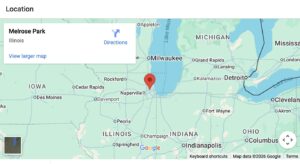
The customer journey shows which page they started on, which pages they clicked next, and their path to the Contact Us or downloadable page. This helps you see how people are navigating your website and what interests them before they reach that form.
The location is important because we often find that as many as half of the form completions come from overseas. Also, it tells you what city and state the request is coming from (without having to ask for that additional information).
Finally, the plug-in captures both completed and abandoned forms. That is, if someone does not complete and click the submit button, you can still gather quality information and potentially reach out to see why they did not complete the process.
Closing Thought
 It used to be that you could get 5 to 10 years out of a quality website. With changes in AI and marketing, you probably want to scale back that expectation to 1-3 years.
Redesigns often just put a new skin on the current content. You really want to examine what your messages are saying to clients and prospects, and see if you can rework and optimize (and probably shorten them).
Chances are, your business is evolving every year as you employ new people, add or remove products and services, and possibly even adjust the audiences and potential clients you attract. Make sure you are as up-to-date (and as lean) as possible.
As always, if you need help, we are here to guide you through any or all of your online marketing needs, with advice and services to meet your business where it is today!