There is no more controversial topic in marketing than AI. It's both a weapon of mass disruption and a weapon of mass distraction. It can be both a tool and a toy. In some ways, it can be a productivity boost or a productivity bust. It can improve your writing while taking you down a rabbit hole.
To determine if it's a help or a hindrance, I think it's good to ask yourself a few questions: Is AI making your marketing easier or harder? Is it making it better or worse? And especially, is AI helping you make better marketing decisions and make more money, or is it a distraction and drain? Also, is it improving your clients' marketing or just cranking out more crap?
Don't get me wrong. I love AI and use it multiple times a day. I know I am just scratching the surface of what it can do, but one thing I know it can't do is get more people to engage with and act on the content I am distributing.
What I would like to discuss is what I have seen so far in 2026, what is working, and what is not.
Overview
 Creating content is only the first step of the marketing journey. AI can help you rewrite, target better, and create graphics, videos, podcasts, and more.
Creating GREAT content means it strikes a chord, resonates, and engages an individual. The broader the audience, the more it resembles the spray-and-pray methods of the past, such as TV, radio, newspapers, and magazines. It would be great if you could customize your content for each individual you reach, but what stands in the way of this is the delivery platforms and how they work.
 Email has the greatest potential to deliver customized content, but that would require an email system capable of analyzing each person's preferences and interests. You can do that with a tool like Crystal Knows. It reads LinkedIn and Gmail, and creates a DISC profile for each person you analyze. That would be helpful to have the content for each person match their communication style, and it could learn from every email sent to tweak its output as it gathers more data about what each person does when the email hits their inbox.
Social media is much harder since the platforms' algorithms control who sees what and when. They are very protective of their data. LinkedIn can block you if you use third-party tools that capture engagement data or automate tasks. Alternative platforms like Facebook, Instagram, Threads, X, and others are more locked down than Fort Knox when it comes to extracting any data.
Most social media platforms are simply ad engines that try to get their audiences to engage with the goal of sharing more ads. Even with their ad systems, you get the basics when it comes to reports, but you are never provided the who and when people engage.
AI is eating into search (Google). US B2B companies are seeing less reliable organic search and more fragmented results.
-
“Zero‑click” behavior is rising: B2B buyers often receive synthesized answers directly in AI tools or AI Overviews instead of clicking through to vendor sites, eroding traditional SEO‑driven inbound models.
-
Platform‑wide, Google Ads is more expensive and less forgiving: 2025 data across industries shows higher costs and falling ROAS and conversion rates.
Opportunities
Email Marketing
 Other than personal contact, email is the best way to reach out to both clients and prospects. The key here is consistency, brevity, and intense list maintenance.
I hear people say, “I don't want to email people too much because I get too much junk mail myself.” The trend that works best in 2026 is sending 1-2 emails per week. They need to be short calls to action that prompt them to return to your website to dig deeper if the topic interests them.
Short above-the-fold summaries, with images, and a call to action are best. Expecting people to read digests, newsletters, or anything that requires a scroll comes across as too much work and leads to more unsubscribes.
- Multiple studies summarized in 2026 put the “sweet spot” for marketing email length at 50–125 words, with up to a 50% higher response rate.
Finally, managing your bounces and unsubscribes weekly improves your deliverability. Also, sending new contacts a simple “we added you to the list” email before adding them directly in the flow engages people who really want to consume your messages.
- Welcome/confirmation emails are strongly associated with better downstream engagement; subscribers who get a welcome email are 42% more likely to read subsequent messages.
LinkedIn Personal Profiles
 Business pages are the preferred distribution channel for LinkedIn companies, but sharing the same content on personal profiles yields better results.
- Recent analyses put the company page's organic reach at around 2–6% of followers per post.
- Multiple studies and agency data points say that, for the same content, personal profiles generate roughly 5–8× more impressions and engagement than company pages.
Although you can only do LinkedIn ads from company pages, the personal post expands the reach of both your content and the awareness that ads create.
LinkedIn Ads
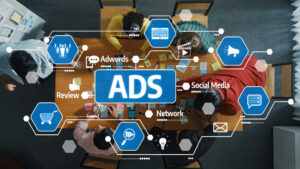 Google Ads (as stated before) are becoming less effective. The average cost per click is around $4. Cost per lead (100 clicks, 10 contacts, 1 conversion) is around $400 each (which is not too bad for B2b). Then it takes around 10 leads to close a sale. That means the cost per sale (rarely measured) is around $4000 each.
Targeting is based on keywords, meaning words and phrases must be constantly updated and modified to achieve those results.
The average B2b company will have to spend $3000 to $10,000 per month to see quality results
LinkedIn Ads target a person within a specific vertical or industry, at a specific job level or title. The average cost per click is around $5, but with our proprietary formula, we have been able to get clicks for around $1 each. That means the cost per sale is around 1/4 that of Google, and they are much more targeted.
What makes this tick is the same as emails: short content summaries with scroll-stopping images and a call to action.
Personalized Social Messaging
 As I said before, personal connections work better than company likes or follows. The problem is that most people either connect and forget or, even worse, connect and pitch.
Messaging someone on their birthday is a great way to warm a connection. If they respond, you know they are active, which could lead to an inquiry, or at least opening the door for you to message them again.
The key with personal messaging is having something to say that benefits them. It could be an article (either one of yours or something else), or just a “How are you doing and what's new?” message.
The key here is not to overcommunicate and let the conversation evolve with a focus on what is in their best interest, not just another sales pitch.
Text Messaging
Finally, texting is like social messaging with two exceptions. First, you need permission (usually a more personal relationship) to be seen as non-spam. Second, texts are the shortest form of messaging (which is why people, especially millennials and Gen Z, like them).
Text messages have a certain urgency, so use them wisely and sparingly. But they can be the most effective form of personal relationship marketing.
Closing Thought
 If you are following the logic, personalized communication is the key to effective marketing in an increasingly automated world. Using a mix of all of the above increases the chances that your messaging will be well-received and ultimately acted upon.
The key to personalized messaging is making your communications intentional and them-focused. The minute you lead with a pitch, you become a long email, a random ad, or a spam text. The recipient must first know and like you before they will trust that you have their best interests in mind.
No AI or automation can replace a human-to-human relationship. It certainly takes more time and may actually cost more money in the long run, but the results speak for themselves this year!
______________________________
Comment below and share your thoughts, ideas, or questions about business-to-business sales and marketing today! Do you have a sales or marketing communications strategy that works for you? What tips or techniques can you share that work for you and your business?
To learn more about this and other topics on B2b Sales & Marketing, visit our podcast website at The Bacon Podcast.